Age-appropriate exams
We tailor the exam to your child's stage, from early childhood visits to teen checkups. You will leave knowing what we saw, what it means, and what happens next.
Serving Wake Forest, North Carolina & surrounding areas
Mon–Fri 8am–6pm · Sat 9am–2pm
Pediatric dentistry in Wake Forest, NC
Gentle, age-appropriate dental visits that help kids feel safe, build healthy habits early, and keep small problems from turning into big ones.
Prevention and comfort
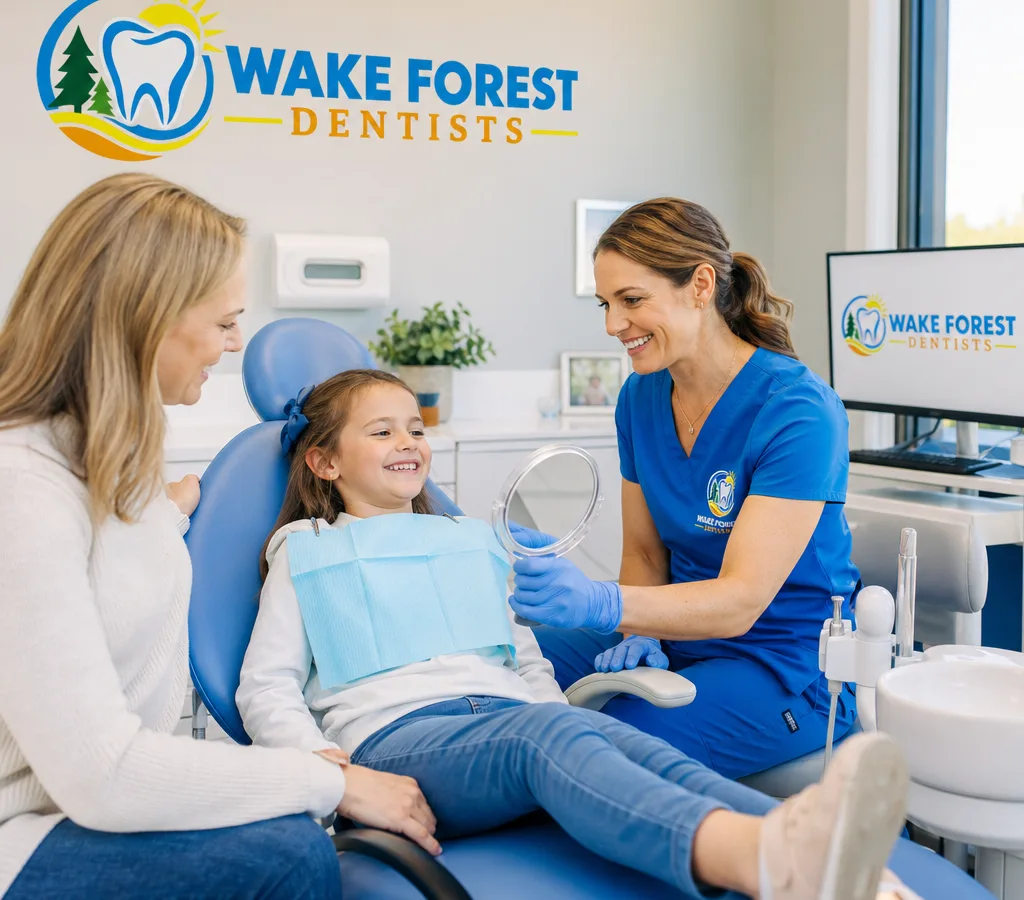
Families looking for wake forest pediatric dentistry usually want two things at the same time: high-quality clinical care and a calm experience that does not create fear of the dentist.
At Wake Forest Dentists, pediatric visits are built around prevention, clear coaching for parents, and a pace that respects how kids actually do best in the chair. That includes simple language, tell-show-do guidance, and time for questions so you know what is normal, what needs watching, and what needs treatment.
Pediatric dentistry covers far more than fixing cavities. It includes early risk checks, monitoring growth and bite changes, protecting enamel, and helping children learn routines that work at home. When treatment is needed, the goal is to keep it conservative, explain options clearly, and choose approaches that fit your child's age, temperament, and dental development.
If you are also looking for a long-term family dental home in the same office, our team provides comprehensive care as dentists in Wake Forest, NC so care can stay coordinated as kids grow.
What to expect
We tailor the exam to your child's stage, from early childhood visits to teen checkups. You will leave knowing what we saw, what it means, and what happens next.
Cleanings, fluoride recommendations when appropriate, and practical brushing and flossing guidance that matches real-life schedules, sensory needs, and attention spans.
Diet patterns, previous decay, dry mouth risk, and home routines matter. We look at the whole picture so prevention is specific, not generic.
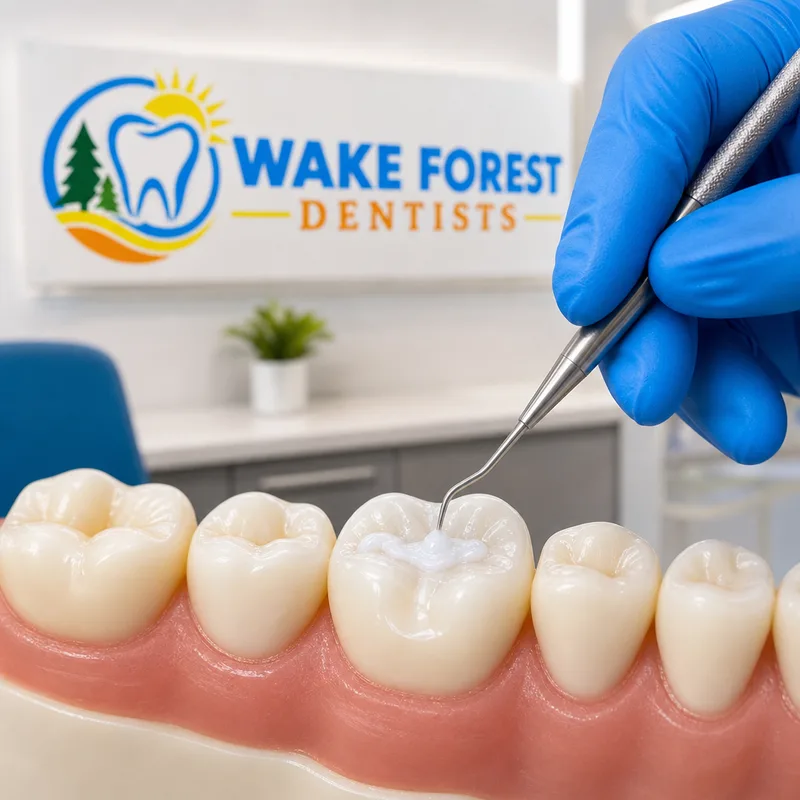
When newly erupted back teeth have deep grooves, sealants can help reduce decay risk. We will explain timing and whether your child is a good candidate.
If a cavity or enamel defect is found, we discuss the size, location, and urgency. When watching a tooth is safe, we will say so.
You get clear options, how-to tips for home, and straightforward answers. No rushed explanations and no pressure.
Kid-friendly care
A successful pediatric appointment is both clinical and behavioral. Our approach is to set expectations, move step-by-step, and keep each part of the visit predictable.
Common tools and methods in pediatric dentistry Wake Forest families often ask about include:
We also spend time on the practical questions that actually change outcomes: how much toothpaste to use, whether an electric toothbrush makes sense for your child, how to handle gag reflex or strong flavors, and what to do when brushing becomes a daily battle.
If you searched carolina pediatric dentistry Wake Forest because you want a trusted local team, the best marker is a plan you can follow at home, not a stack of handouts. You should leave with a few clear next steps and a recall schedule that fits your child's risk level.
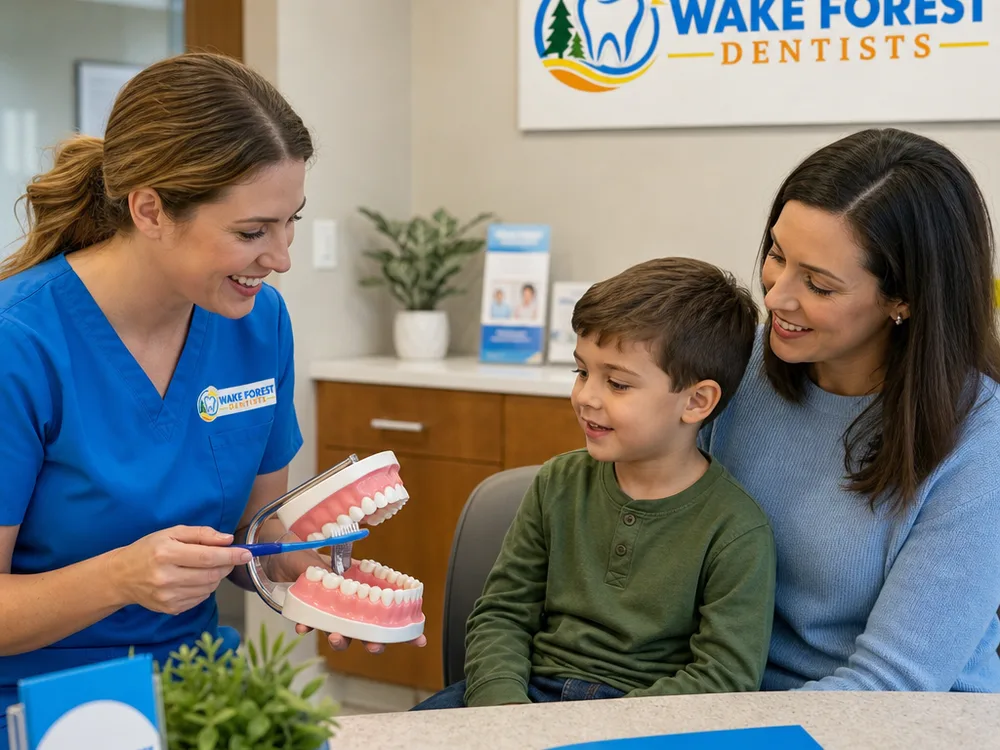
Your child's visit
We gather basics like medical history, sensitivities, and prior dental experiences. If your child is anxious, tell us what has or has not worked in the past.
We examine teeth and gums, look for early decay and enamel issues, and check developing bite and spacing as appropriate for age.
We remove plaque buildup, review brushing and flossing technique, and discuss preventive steps like fluoride recommendations and sealants when indicated.
You get a plain-English explanation of what we found, what can wait, and what should be treated. We go over benefits and tradeoffs so you can decide confidently.
If treatment is planned, we outline the sequence and what your child will feel. We also set a recall timeline based on risk, not a one-size schedule.
Cost guidance
Wake Forest pediatric dentistry costs typically range from about $150 to $350 for a routine visit (exam, cleaning, and basic preventive care), while treatment such as fillings, sealants, or dental crowns can add a few hundred dollars per tooth depending on complexity. More involved needs, like space maintainers or management of dental anxiety with additional support, can increase the total.
Your final cost depends on your child's cavity risk, whether X-rays are needed, the number of teeth being treated, and your insurance benefits. Exact pricing is confirmed after we evaluate your child's mouth and discuss the plan with you.
Practical answers
Most children should have their first dental visit by age 1 or within 6 months of the first tooth coming in. Early visits help catch enamel issues and feeding-related decay risks, and they make future appointments feel normal instead of scary.
Many children do well with checkups every 6 months, but the best interval depends on cavity risk. If your child has a history of decay, deep molar grooves, orthodontic changes, or inconsistent brushing at home, more frequent preventive visits may be recommended.
No. X-rays are taken when they are clinically needed, based on age, eruption stage, and cavity risk. Bitewing X-rays are commonly used to check for cavities between teeth, and we aim to keep images as limited as possible while still being safe and diagnostic.
Sealants are often a good choice when a child's permanent molars have deep grooves that trap plaque. They are quick to place and can reduce the chance of decay on chewing surfaces, especially during the first few years after the tooth erupts.
Tell us up front what happened and what your child is worried about, and we will adjust the pace and communication. In pediatric dentistry, the plan is not only about the tooth; it is also about helping your child feel in control with predictable steps, breaks, and clear explanations.
Yes, cavities in baby teeth often need treatment because they can spread, cause pain, and affect eating, sleep, and speech. Treating decay early can also help hold space for adult teeth and avoid larger procedures later.
High cavity risk is more likely with previous cavities, frequent snacking or sipping sweet drinks, plaque that builds up quickly, enamel defects, and inconsistent brushing with fluoride toothpaste. We review habits and clinical findings together so your prevention plan matches your child's risk level.
Share your child's age, any dental concerns, and what you want help with most. We will recommend a clear next step and plan a visit that fits your family.
Within about 10 miles